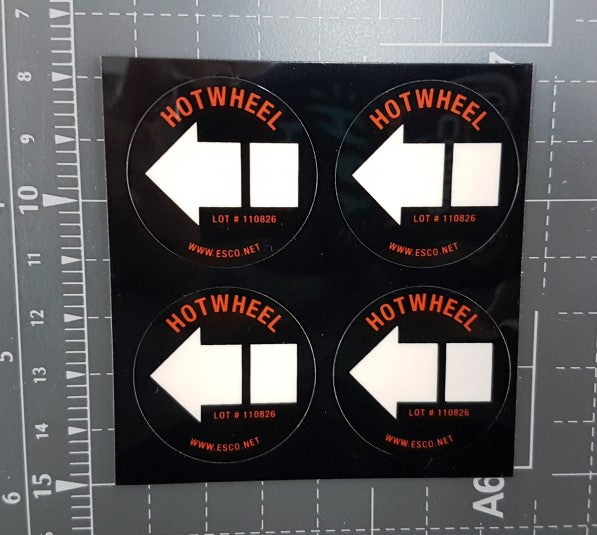
Manufacturing processes have always required supervision to ensure the final product has been made correctly.
In this regard, the implementation of quality systems (ISO, UNE…) in recent times has created a greater need to carry out quality controls and keep thorough records of industrial processes. For this reason, manufacturers' goal is to find a device with two essential features: the highest precision and the lowest cost.
Temperature labels have proven to be a good solution for this purpose since their beginnings more than 40 years ago, increasingly expanding their presence in various sectors of industry.
Why use irreversible temperature labels instead of other types of sensors?
- Economical and easy to use solution
- No batteries required
- Immediate response
- Permanent record of the maximum temperature
- Resistant to oil, water and steam (and pressure up to 3 atm)
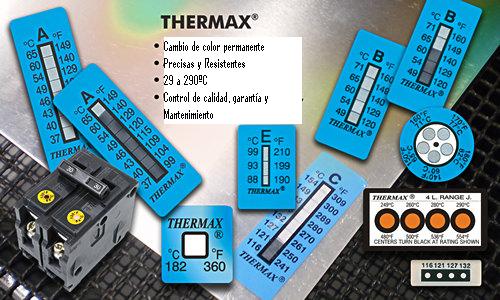
- Wide range of temperatures available: +29ºC to +290ºC
- Clear colour change: white/orange to black
- Temperature control in areas inaccessible to operators
- Direct reading on the surface to be monitored

Applications of temperature indicators
Plastics industry
- Printing, extrusion, plastic melting and moulding processes.
Motor industry
- Aeronautics.
- Racing: engines and cables (overheating).
- Various engine components: crankcase, bearings, shoes, brakes…
Electrical industry
- High-voltage installations and switches (overheating).
Metallurgical industry
Food industry
- Pasteurisation, sterilisation and food packaging.
Electronics
- Electronic components (overheating).
Chemical industry
- Exothermic reactions and storage of heat-sensitive chemical substances.
Textile industry
- Heat fusion of interlinings and high-speed presses.
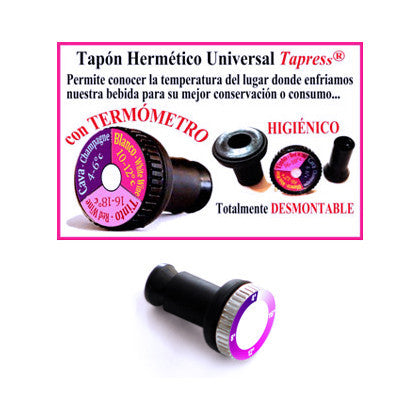
Likewise, once a given product has been manufactured, there are special sensors to monitor temperature during its storage and/or transport: low-temperature indicators for cold rooms and/or refrigerated trucks, liquid-crystal thermometers for constant monitoring of the temperature of a given room, container, etc.