


Optical devices
Adjustment and positioning of components, adjustable mounts, focusing mechanisms. The ST7192 brass ball cage is the one specifically recommended by Steinel.
 Official distributor in Spain
The line of guide pillars, guide bushes and ball cages for miniature and precision die sets. Materials hardened to 62 ±½ HRC and diameters from 3 mm.
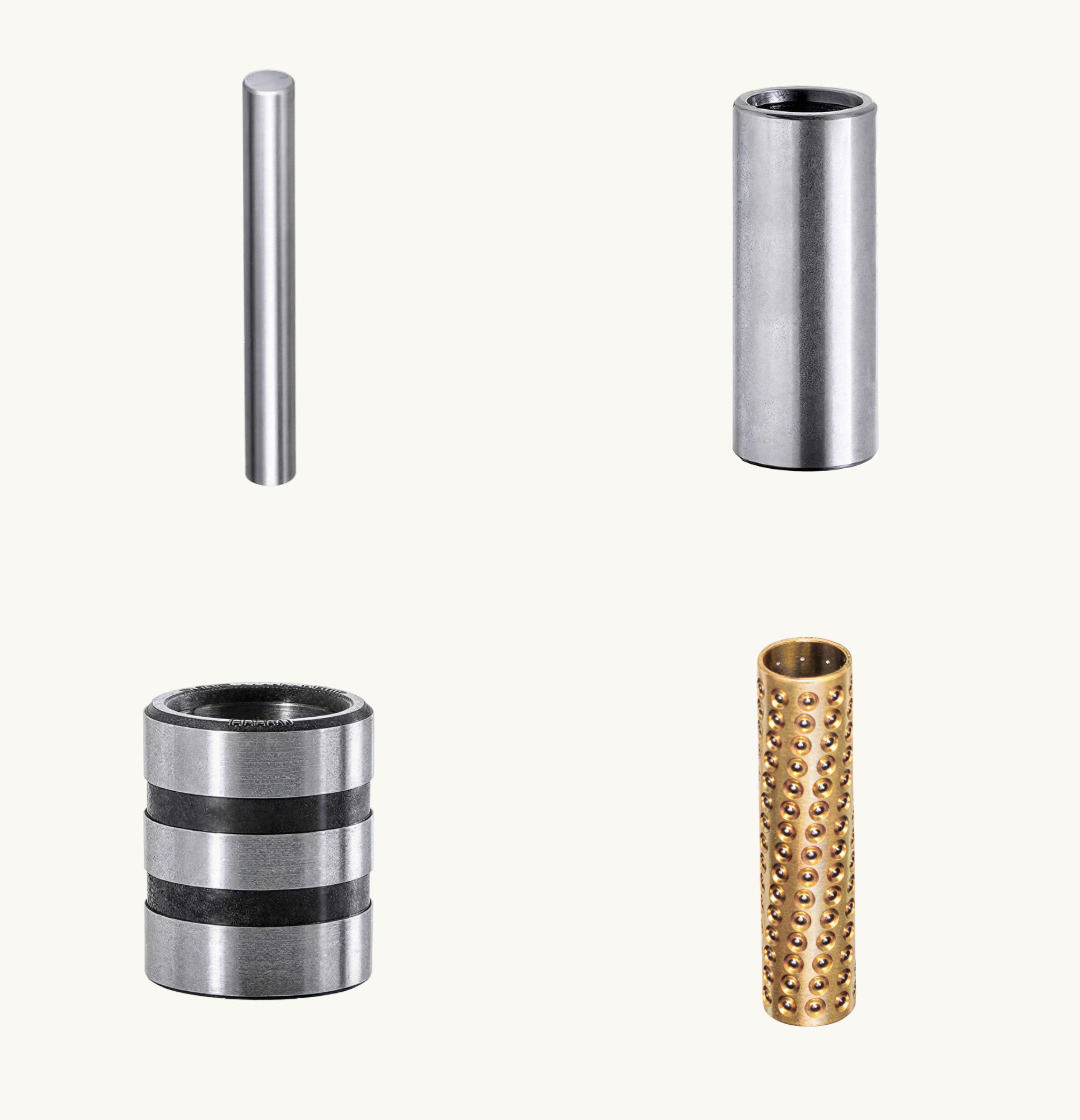
The downsized version of the standard guide element range for die sets: they keep the technical properties of the regular series — case-hardening, ground and lapped finish, preloaded fit — brought down to dimensions below the standard DIN 9825 range.
They are used not only in die sets but also as structural components in high-precision electrical and optical instruments, measuring and metrology equipment, precision machinery and mechatronics.
The guide pillar + ball cage + guide bush set forms a preloaded precision guiding system.
Each guide bush part number is compatible with the pillars and ball cages of the same series by nominal diameter. Expand one to see its datasheet, photo, dimensioned drawing and dimension table.
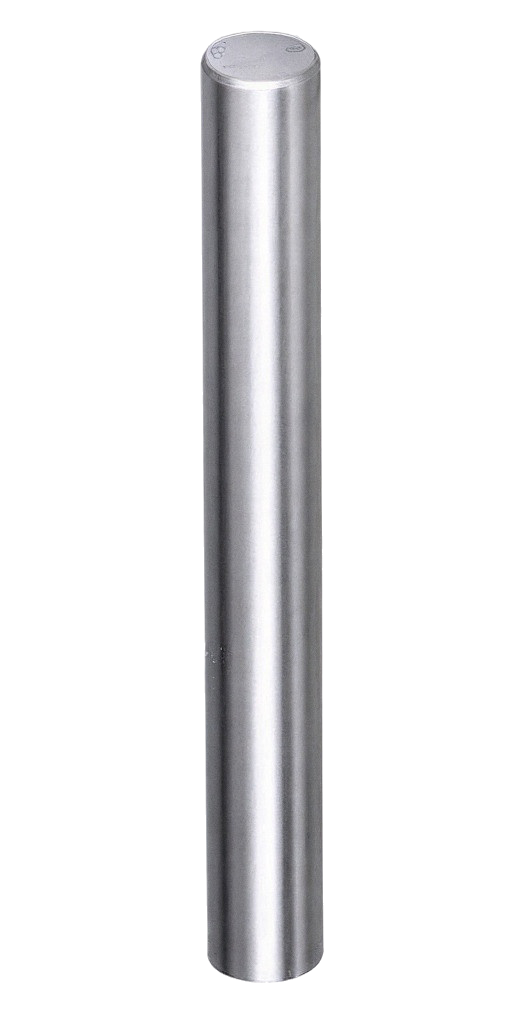
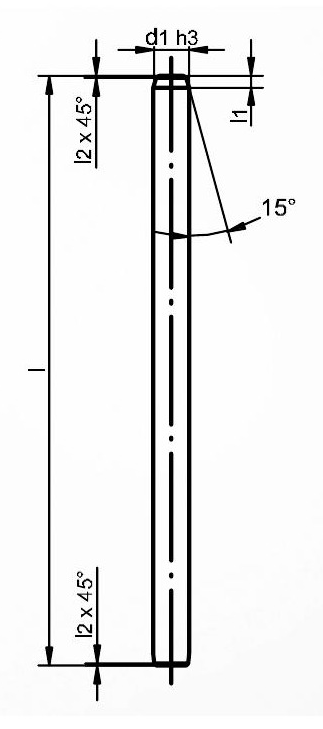
| Material (Ø ≥ 8) | 1.7131 (16MnCr5) case-hardened |
|---|---|
| Material (Ø 3–6) | 1.2379 |
| Hardness | 62 ±2 HRC |
| Guide diameter | ISO h3 |
| Mounting bore | ISO P6 (press fit) |
| Finish | Ground and lapped |
| d₁ h3 (mm) | l (mm) | Item number |
|---|---|---|
| 3 | 30 · 40 · 60 · 80 | ST7190 03 × … |
| 4 | 50 · 60 · 80 · 100 | ST7190 04 × … |
| 5 | 50 · 60 · 80 · 100 | ST7190 05 × … |
| 6 | 60 · 80 · 100 · 125 | ST7190 06 × … |
| 8 | 80 · 100 · 125 · 160 | ST7190 08 × … |
| 10 | 80 · 100 · 125 · 160 | ST7190 10 × … |
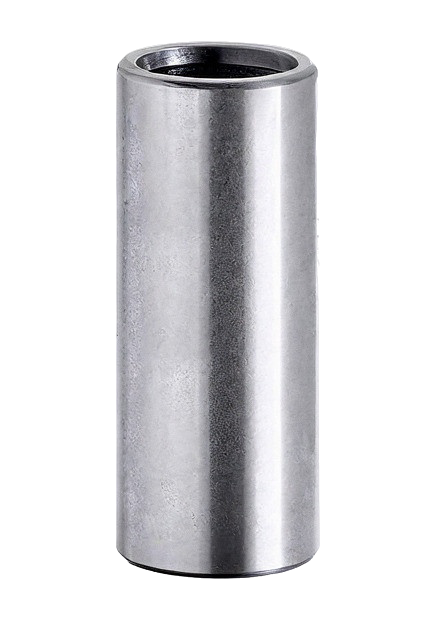
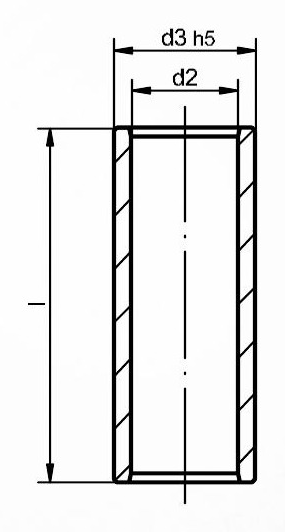
| Material | 1.3505 (100Cr6) hardened |
|---|---|
| Hardness | 62 ±1 HRC |
| Outer tolerance | h5 |
| Mounting bore | ISO H6 |
| Accessory | SZ9742 (Loctite adhesive) |
| Mounting | Secure with adhesive; do not press in |
| d₁ h3 | d₂ | d₃ h5 | l (mm) |
|---|---|---|---|
| 3 | 5 | 7 | 10 · 20 · 30 |
| 4 | 6 | 8 | 10 · 20 · 30 |
| 5 | 7 | 10 | 10 · 20 · 30 |
| 6 | 9 | 12 | 20 · 30 · 40 |
| 8 | 11 | 15 | 20 · 30 · 40 |
| 10 | 13 | 19 | 20 · 30 · 40 |
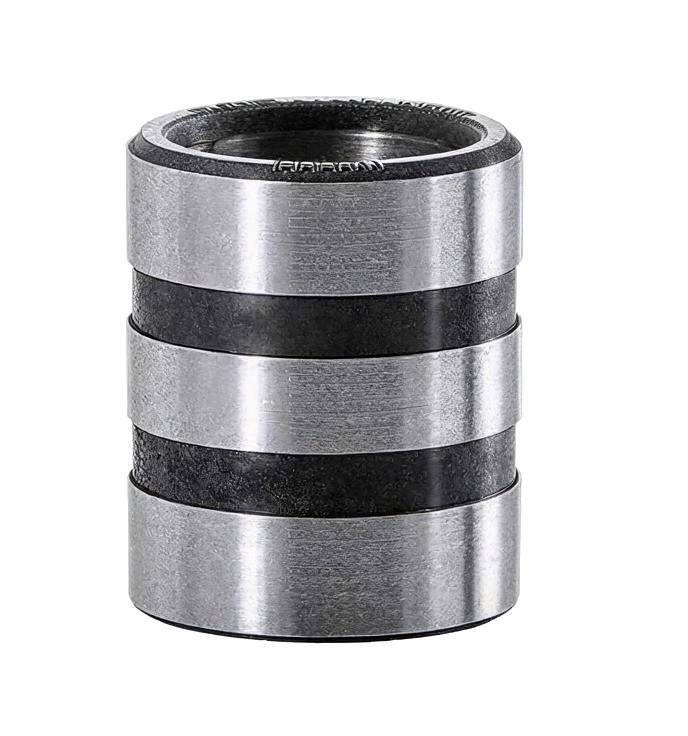
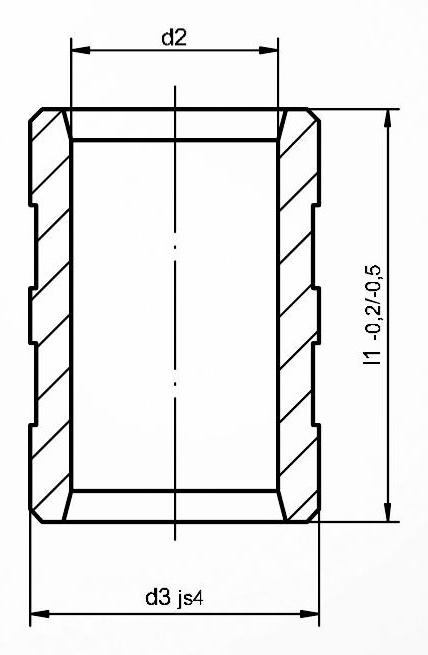
| Reference standard | DIN 9831 / ISO 9448 |
|---|---|
| Material | 1.3505 (100Cr6) hardened |
| Hardness | 62 ±1 HRC |
| Outer tolerance | js4 |
| Mounting | Secure with adhesive; do not press in |
| Range | Ø 6–10 mm |
| d₁ h3 | d₂ | d₃ js4 | l₁ (mm) −0.2/−0.5 |
|---|---|---|---|
| 6 | 9 | 12 | 15 · 20 · 25 · 30 · 40 |
| 8 | 11 | 15 | 20 · 25 · 30 · 35 · 40 |
| 10 | 13 | 19 | 20 · 25 · 30 · 40 · 45 |
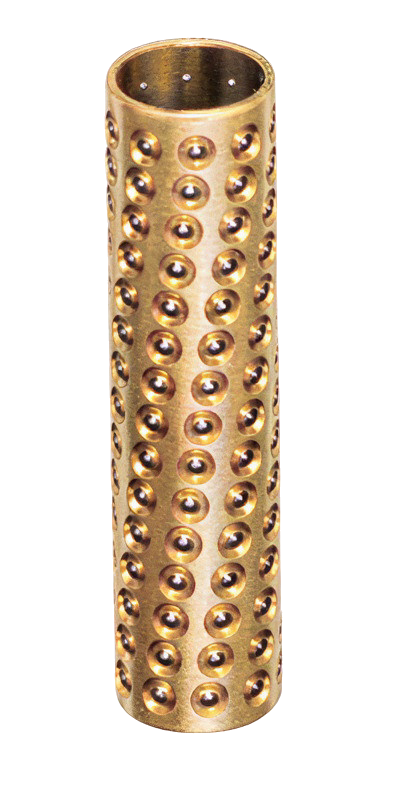
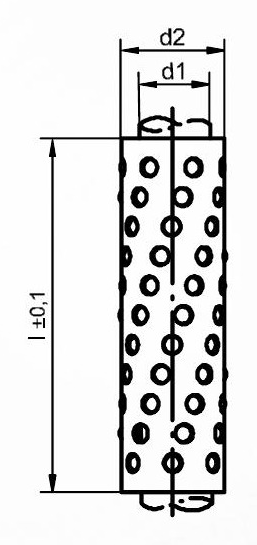
| Cage material | Brass 2.0401 |
|---|---|
| Balls | Hardened steel · quality class 1, sorted |
| Length tolerance | ±0.1 mm |
| Compatibility | ST7190 + ST7191/97 of the same Ø |
| d₁ (mm) | d₂ (mm) | l ±0.1 (mm) | Item number |
|---|---|---|---|
| 3 | 5 | 10 · 20 · 30 | ST7192 03 × … |
| 4 | 6 | 10 · 20 · 30 | ST7192 04 × … |
| 5 | 7 | 10 · 20 · 30 | ST7192 05 × … |
| 6 | 9 | 20 · 30 · 40 | ST7192 06 × … |
| 8 | 11 | 20 · 30 · 40 | ST7192 08 × … |
| 10 | 13 | 20 · 30 · 40 | ST7192 10 × … |
Assembly follows the pattern of a standard die set, with two critical dimensional particularities: the guide pillar is press-fitted (ISO P6) and the guide bush is bonded with adhesive, never press-fitted.
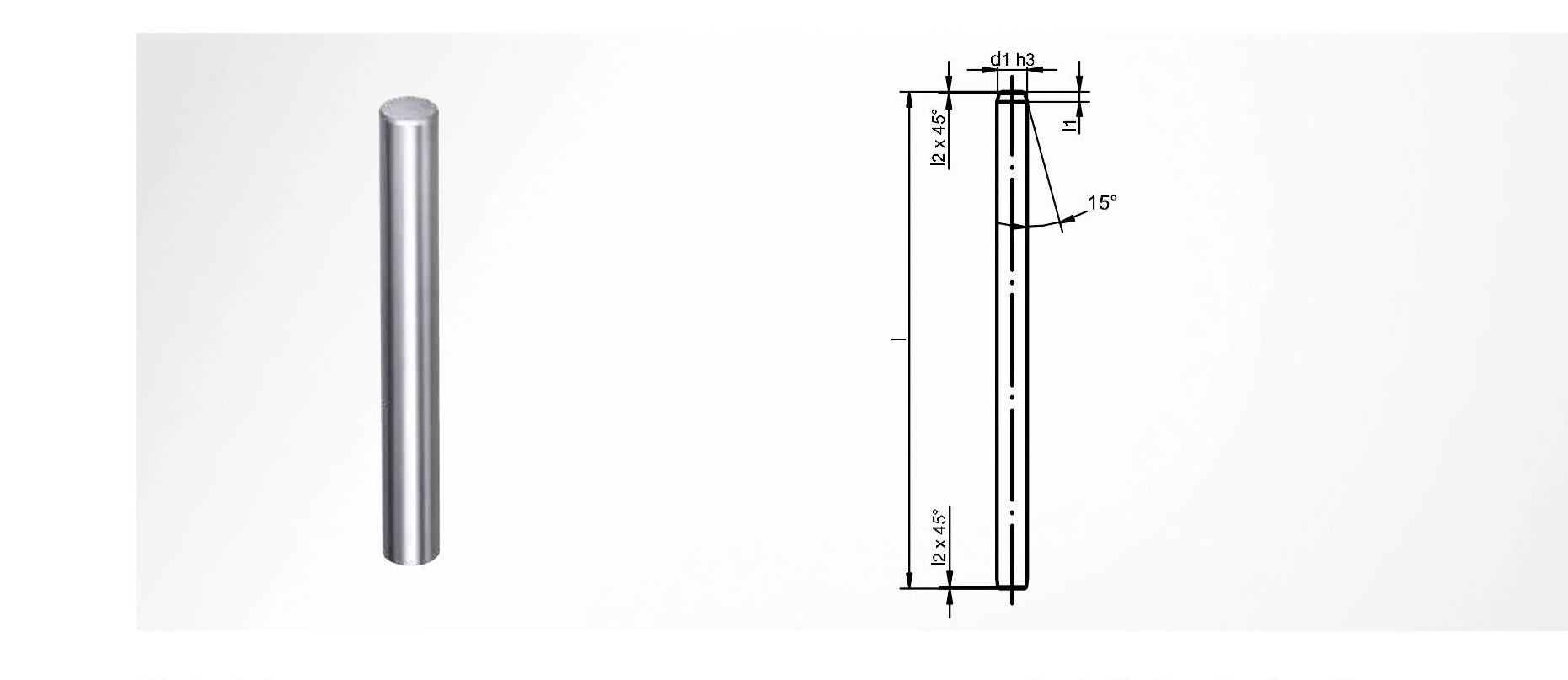
It is mounted in the lower die shoe bore with an ISO P6 fit (press fit, no additional retainer). Apply oil — never grease — during assembly.
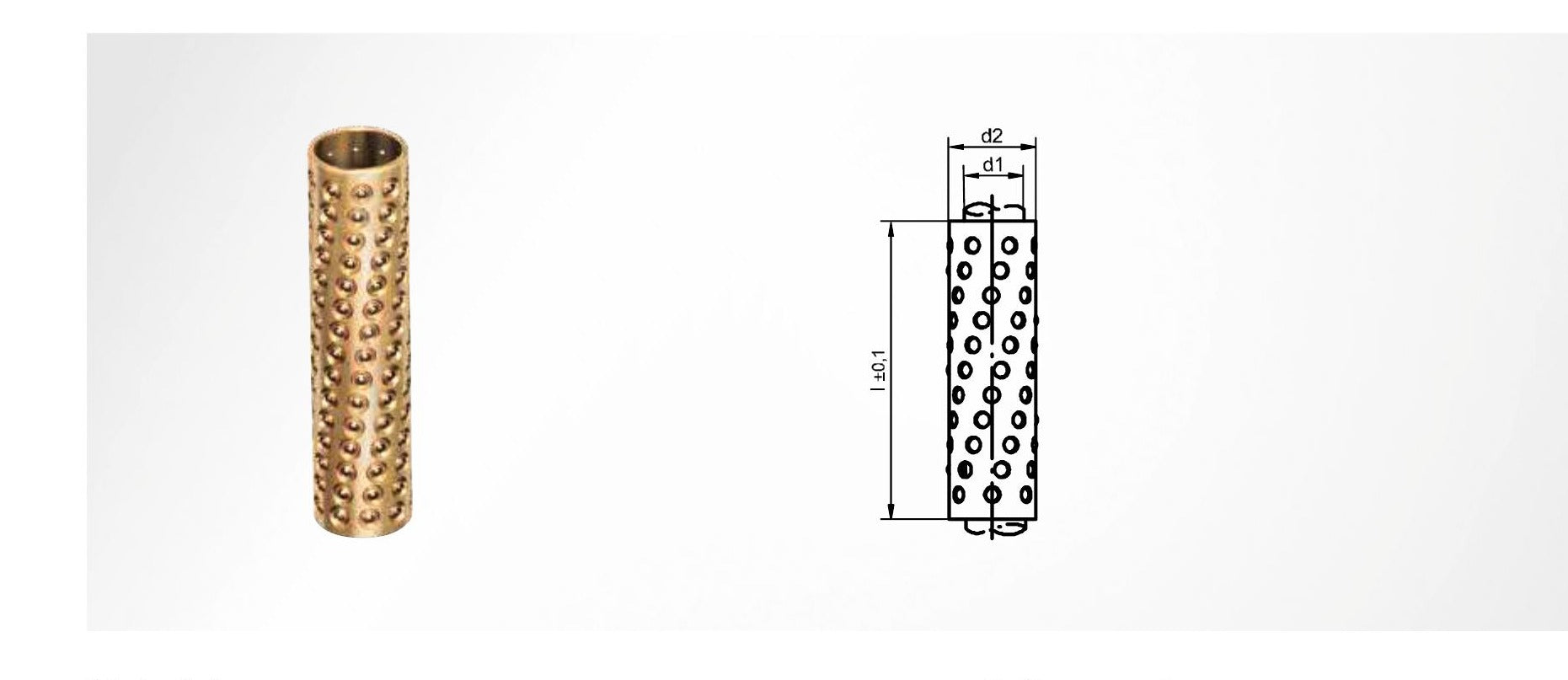
It is inserted over the pillar, free of stress. The quality class 1 sorted balls maintain the nominal preload with no radial play.
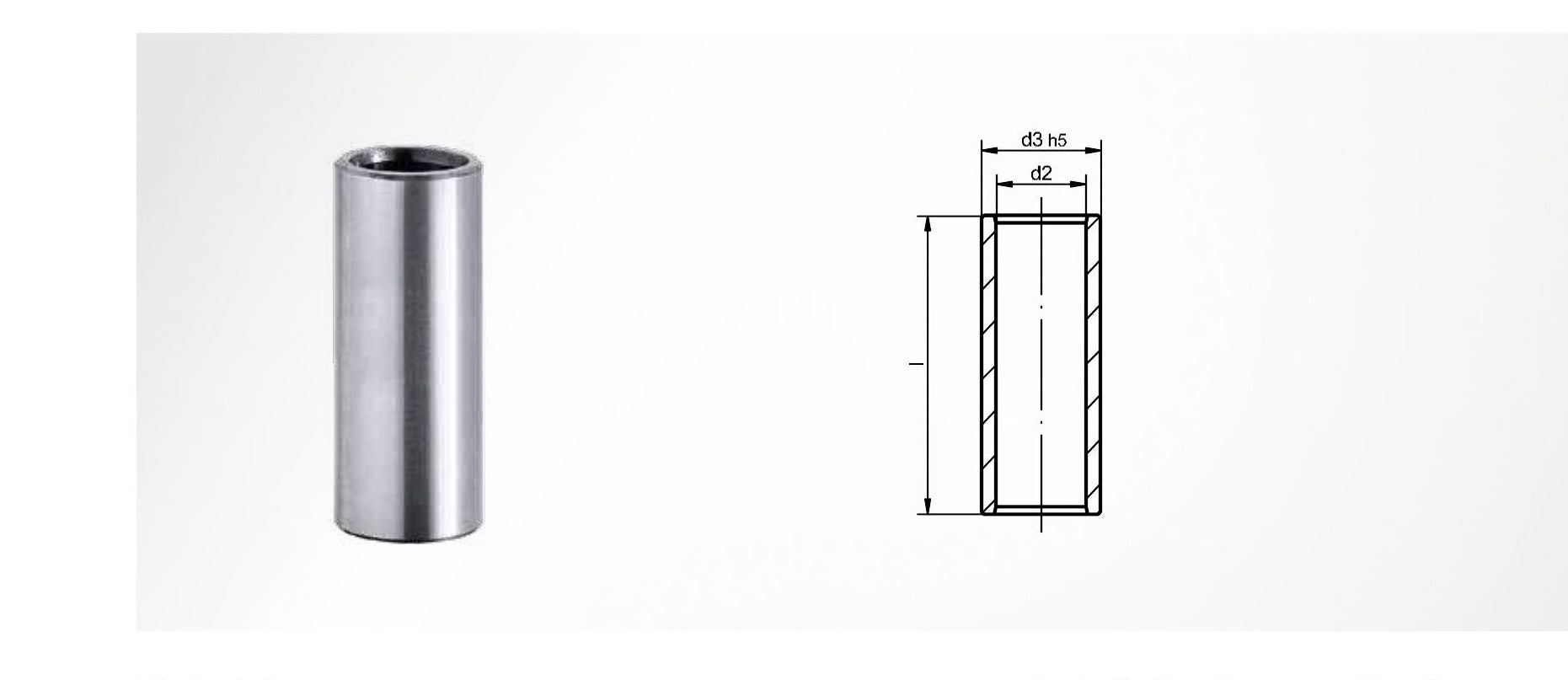
It is NOT press-fitted. It is bonded with Loctite adhesive (SZ9742) on clean, grease-free surfaces, in the upper die shoe.
As the die closes, the guide bush seats over the ball cage with preload controlled by the h3 (pillar) + h5 or js4 (guide bush) tolerances.
Tell us about your use case and our engineering team will advise you on choosing the optimal solution in miniature die sets.
They cover the dimensional range where standard DIN series fall short, or where a compact, purpose-built geometry is preferable.
Adjustment and positioning of components, adjustable mounts, focusing mechanisms. The ST7192 brass ball cage is the one specifically recommended by Steinel.
Dial indicators, internal micrometers, probing mechanisms where the guiding must be free of play.
Progressive dies for very low-profile terminals with sub-millimeter tolerances.
Fine blanking of thin sheet: watchmaking, medical devices, microelectronics.
Miniature linear positioners, low-stroke actuation mechanisms.
Standardized small-size die sets with instrumentation-grade guiding.
For diameters 8 to 10 mm the material is 1.7131 (16MnCr5) case-hardened — a case-hardening steel with a tough core that handles cyclic bending well. For diameters 3 to 6 mm it is 1.2379, a tool steel with greater dimensional stability after hardening: in very small-diameter pillars the thermal distortion from the treatment is comparatively more critical, and a steel with less distortion is preferable. Both variants reach 62 ±2 HRC and work with ISO h3 tolerance.
ST7191 is the plain version, in 1.3505 (100Cr6) hardened, outer tolerance h5, mounted in ISO H6 and bonded with adhesive; it covers Ø 3–10 mm. ST7197 is the version with adhesive grooves on the outer surface, same material and hardness, outer tolerance js4 and referenced to DIN 9831 / ISO 9448 (formal standard compliance); it covers Ø 6–10 mm. The ST7197 is preferable when certification is required or when the adhesive grooves are needed for a robust bond. Both: bonded with adhesive, not press-fitted.
Radial pressure on a small-diameter guide bush deforms the internal diameter. In standard die sets (Ø ≥ 16 mm) a deformation of 5 µm is negligible compared with the nominal clearances; in miniature die sets (Ø 3–10 mm) those same 5 µm can represent a significant percentage of the clearance and push the preload out of tolerance. That is why Steinel specifies bonding with Loctite adhesive (SZ9742) on clean surfaces: the fixing is robust without introducing any deformation.
Because brass (Brass 2.0401) combines the two critical properties for small parts: high wear resistance (the material mass is small, so durability per unit volume matters) and dimensional stability against thermal variations and aging. The aluminum or plastic versions of the larger cages are not offered in mini series because their advantages (mass reduction, chemical resistance) do not offset the lower durability in instrumentation applications, where the cage must last the entire life of the device.
The range goes up to 160 mm in length for pillars 8 and 10 mm in diameter; at the other end, 3 mm pillars from 30 mm in length. The choice must consider the length-to-diameter ratio: very high lengths relative to the diameter drastically reduce stiffness under lateral load. As a reference (Steinel curves for standard pillars): increasing the diameter by a factor of 1.68 reduces deflection by 87.5 %. For significant radial loads it may be preferable to reduce the length or move to a larger diameter — the Surisa technical team can help size the set.
We distribute the complete Steinel Normalien range in Spain. We advise you on part numbers, combinations by nominal diameter and delivery times.