Glass sterilization is a process that affects different types of containers such as bottles, baby bottles, lunch boxes, trays and the like. In all cases, it is essential to carry it out following guidelines designed to guarantee the best possible result.
It is imperative to control the temperature in these processes to ensure compliance with regulations. Temperature labels are an economical and reliable option for this purpose.
How to carry out the sterilization of glass material?
It will depend on the type of object to be sterilized. In the following classification, we explain the characteristics of each type of sterilization.
Sterilization of glass laboratory material
Tubes, flasks and other materials are usually sealed with greasy cotton over which a waterproof paper is placed. For sterilization, the following is usually used:
- Dry heat. You should expose the material directly to fire, preventing it from exceeding 100ºC.
- Moist heat. Water at 100ºC for a maximum of 10 minutes is common.
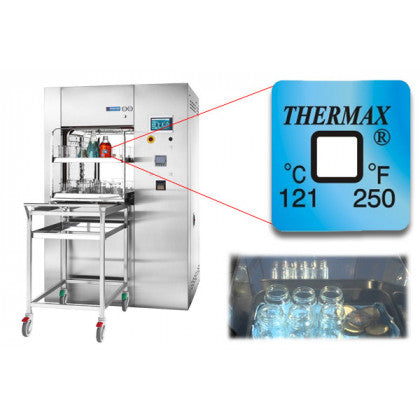
- Steam. The ideal temperature is 121ºC for about 15 minutes.
Sterilization of glass food-use containers
The usual thing is to put them in boiling water at 100ºC and leave them for 10 minutes. Afterwards, dry them properly and you can use them with complete safety.
Temperature labels in glass sterilization
When using glass containers in the laboratory or in a hospitality business, regulations require sterilizing them effectively. If we do not do so, we could expose the patients or customers of the establishment in question to serious consequences for their health. We must emphasise that the possibility of leaving a container in boiling water for longer than appropriate could cause it to break. In addition, the exact temperature of the water is not always known unless we have some kind of help. Temperature labels, in this case, are a good solution, since they adhere easily to the container, as they withstand moisture and heat. Being stuck to the glass container, they guarantee that the indicated temperature is the one the container has received. They have a temperature sensor that changes colour permanently when the marked temperature is reached. This makes it possible to ensure that the exact temperature has been reached for the sterilization to have been correct.
These temperature indicators are an effective method for the quality control of glass material sterilization. There are labels on the market that can measure temperatures over a wide range, so they can also be used to sterilize other materials such as plastic.
Recommended temperature indicators for glass sterilization control
Sterilization helps the constant reuse of containers and, above all, the ability to continue storing all kinds of food or drink inside them. Its usefulness is undeniable for avoiding contamination by contact and for better protecting the food to be preserved. It must be stressed that it is vitally important that the drying of the container is perfect, since a little water can become the perfect habitat for microorganisms. If you are going to prepare some kind of jam or similar, you will have to repeat the process with the jar tightly closed to sterilize the outside of the container. Glass sterilization is, therefore, an obligation to guarantee the wholesomeness of the food stored in any type of container. We always advise relying on temperature labels to make the process much more reliable and turn it into the best guarantee of success.