Plastic container sterilization is a simple process, but one that must always be carried out meticulously to achieve the best result. One of the most important factors is to control the temperature of the process. As a complement to the autoclave indicator, temperature labels are an effective method to guarantee that sterilization has been carried out correctly. Below, we review what the essential characteristics are to achieve correct sterilization.
Why is plastic container sterilization essential?
Plastic container sterilization is essential because, due to its composition and use, there is a direct increase in contamination by contact with whatever you are going to store inside. Correct sterilization is always decisive to avoid health problems.
What should the autoclave temperature be to sterilize a plastic container?
It is advisable to start by indicating that, depending on the type of container and its composition, sterilization could take more or less time. If you are going to use the autoclave, we remind you that you should only place containers made of fluoropolymers in it. Materials such as polypropylene, polypropylene copolymer, polymethylpentene (PMP), PFA, ETFE or FEP must be sterilized in the autoclave always with the lid closed and not screwed on. The sterilization temperature/time combination is 121º for a quarter of an hour. Other compounds, such as polysulfone and polycarbonate, need the same temperature but for 20 minutes. Containers made of polystyrene, PVC, LDPE or high-density polyethylene cannot, under any circumstances, be sterilized in an autoclave. Options such as ethylene oxide or formaldehyde are generally used.
Why is it so important to control the temperature during sterilization?
It is important mainly because, if the exposure time to heat is not controlled, the container can contaminate whatever is deposited inside it with its compounds. Likewise, the use of other alternatives such as detergent or non-abrasive cleaners only removes the most external dirt, but not that which can end up entering the material, altering its strength and durability. The use of dry heat, or the microwave, does not achieve the expected result, since it is almost impossible to control the exact temperature in each case. In addition, in the first case, each container must be subjected to a temperature between 150º and 170º for a period of between 60 and 150 minutes to achieve a result identical to that offered by the autoclave. As you can deduce, we think it more logical to use an effective system than to opt for alternatives that end up putting health at risk. We do recommend checking the correct operation of the temperature sensor so that the sterilization process is always correct. If you notice any kind of alteration in the reading it provides, you should change it so that sterilization is much more effective.
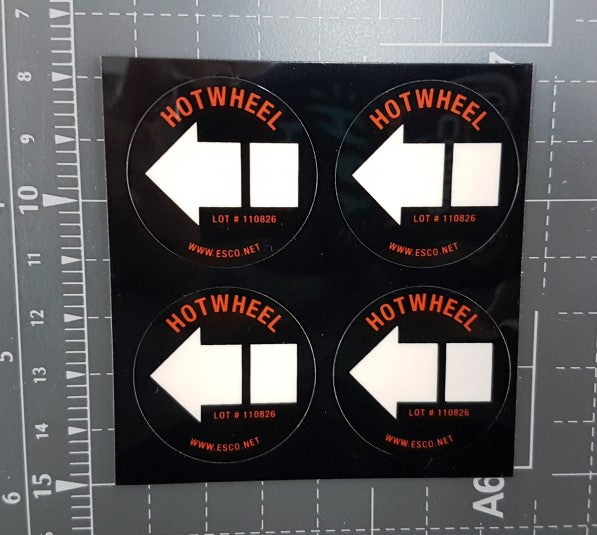
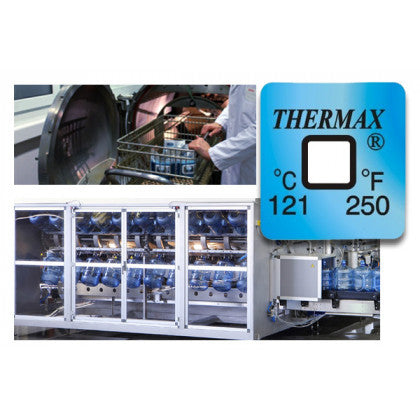
An effective and also complementary alternative to the appliance's thermometer is temperature labels. These indicators are stuck directly onto the container, so the temperature they measure will be exactly what the plastic container receives. As they are irreversible temperature indicators, at the end they will mark the temperature reached, so we can check whether it has been carried out correctly.
Main indicators for temperature control in plastic sterilization
- TDI thermometer for disinfection control
- 1-temperature-point irreversible thermometer
- 8-temperature-point irreversible thermometer
We can see that plastic container sterilization must meet a series of specific conditions to achieve the desired purpose. The autoclave is always the most effective alternative, since it completely eliminates any kind of residue or contamination. Using it correctly, you will avoid the problems we have described.