


Thermometers for hospitals and pharmacies
TL;DR: Hospitals and pharmacies have to monitor temperature at several points: medicine refrigerators (2–8 °C), freezers, ambient-temperature storerooms, the blood bank and sterilization areas. Electronic data loggers are the primary system, and adhesive thermometers add a quick reading and visual evidence of deviations. Surisa stocks reversible indicators for the refrigerator and irreversible ones for detecting temperature rises and drops.
A hospital or a pharmacy keeps products whose efficacy depends on temperature: vaccines, insulins, blood products, reagents and medicines in general. A deviation is not always visible, but it can render a whole batch unusable. That is why temperature control is a daily task and part of the center's quality procedures.
Temperature control areas in a hospital
In international technical terminology, this is referred to as hospital temperature monitoring and pharmacy refrigerator temperature monitoring.
| Area | Typical range | What is monitored |
|---|---|---|
| Pharmacy and ward refrigerators | 2–8 °C | Vaccines, insulins and thermolabile medicines |
| Medicine storeroom | Below 25 or 30 °C, depending on the data sheet | Medicines at room temperature |
| Blood bank | Red blood cell concentrates at 2–6 °C; platelets at 20–24 °C; frozen plasma below −25 °C | Blood products |
| Sample freezers | According to the laboratory protocol | Samples and reagents |
| Central sterilization department | 121–134 °C in the autoclave | Surgical instruments |
Operating rooms, cleanrooms and laboratories also have their own air-conditioning requirements, managed by the building's installation.
For the central sterilization department, see sterilization of surgical and laboratory equipment and autoclave sterilization temperature and time. For neonatal units, see incubator temperature control.
Temperature control in the pharmacy
In community and hospital pharmacies, control focuses on two points:
- The refrigerator: thermolabile medicines must be kept between 2 and 8 °C. The temperature is checked and recorded at least once a day, and it is worth knowing what happened overnight or over the weekend.
- The storage and dispensing area: most medicines state a maximum temperature on their data sheet, usually 25 or 30 °C. In summer, or in premises with a lot of sun exposure, that limit can be exceeded.
Good practice in the refrigerator means using a dedicated medicine refrigerator, not placing products against the walls or the back, and avoiding long door openings. We explain the 2 to 8 °C range and the cold chain in detail in vaccine and refrigerated medicine temperature.
Types of thermometer for hospitals and pharmacies
- Temperature data logger: it measures and stores the temperature at regular intervals and lets you produce charts and tables. It is the primary system when the protocol calls for a continuous record.
- Max/min thermometer: it shows the current temperature and the maximum and minimum temperatures reached since the last reset. Useful for the daily refrigerator check.
- Reversible adhesive thermometer (LCD): it changes color according to the temperature at that moment. It is stuck to the refrigerator or the wall and read with no batteries or instruments.
- Irreversible indicator: it changes color permanently if a critical temperature is exceeded, or fallen below. It leaves a record of deviations nobody saw.
- Time and temperature indicator: it changes color progressively according to the exposure time above a temperature. It shows not only whether there was a deviation, but how long it lasted.
Adhesive thermometers are an inexpensive solution that complements data loggers: they give anyone an immediate reading and visual evidence of what happened.
Surisa indicators for each use
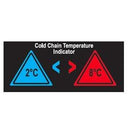
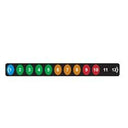
- Refrigerator, daily reading: reversible cold chain indicator, which shows whether the temperature is below 2 °C, between 2 and 8 °C or above 8 °C. LCD refrigerator thermometer, 1 to 12 °C with a color code.
- Refrigerator, unseen deviations: Coldchain Complete XS, which activates irreversibly below 2 °C and above 8 °C.
- Ambient-temperature storeroom: WarmMark at 25 °C, which records the exposure time above that temperature.
- Hot surfaces: Tempsafe, a label that changes color and displays a warning message when a surface heats up, to prevent burns.
Frequently asked questions about thermometers for hospitals and pharmacies
What temperature should a pharmacy refrigerator be at?
Between 2 and 8 °C, which is the storage range for most thermolabile medicines. The temperature must be checked and recorded at least once a day. A system that detects deviations outside opening hours, such as a data logger or an irreversible indicator, is also advisable.
At what temperature are medicines that do not need refrigeration stored?
Each medicine states its limit on the data sheet and on the packaging, usually "do not store above 25 °C" or above 30 °C. The storeroom and the dispensing area must be kept below that limit, in summer too.
Which thermometer is better for a medicine refrigerator: digital or adhesive?
They are complementary. A digital logger stores a history with data, which is what many protocols require. An adhesive LCD thermometer gives an immediate reading to anyone who opens the refrigerator, and an irreversible indicator leaves visual evidence of a deviation even if nobody saw it.
What is monitored in a blood bank?
Each blood product has its own range: red blood cell concentrates are stored between 2 and 6 °C, platelets between 20 and 24 °C with agitation, and frozen plasma below −25 °C. Blood storage equipment has its own recording and alarm systems.
How do I know whether the pharmacy refrigerator failed over the weekend?
With a temperature data logger, by reviewing the history, or with an irreversible indicator stuck inside the refrigerator. An indicator such as Coldchain Complete XS changes color permanently if the temperature fell below 2 °C or exceeded 8 °C for long enough.
Recommended products
Temperature indicators selected for this application. Buy the reference you need online.
-
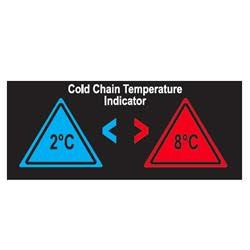 Cadena de frío
- Size
- 96 x 40 mm
- Accuracy
- ±1 ºC
- References
- 1 (single)
-
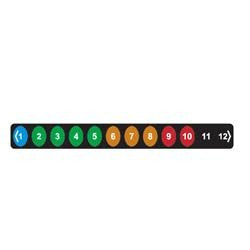 Refrigerator 12 levels
- Size
- 10 x 90 mm
- Accuracy
- ±1 ºC
- References
- 1 (single)
-
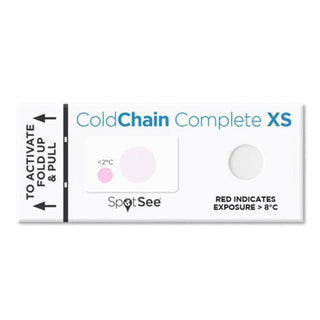 Coldchain XS
- Accuracy
- ±1 ºC
- References
- 1 (single)
-
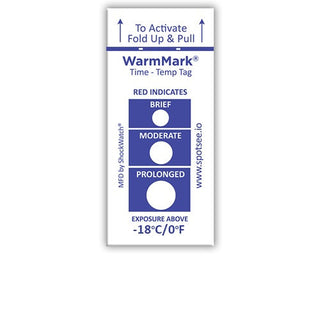 WarmMark Time and Temperature (pack 100 units)
- Size
- 46 x 19 mm
- Accuracy
- ±1 ºC
- References
- 12
-
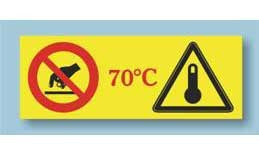 Tempsafe
- Size
- 60 x 160 mm
- Accuracy
- ±5 ºC
- References
- 1 (single)
Shall we talk about your project?
Tell us about your use case and our engineering team will advise you on choosing the best solution.